In the world of engineering, whether it’s software development, DevOps, or infrastructure management, how we approach problem-solving and decision-making can drastically affect the outcome of our projects. One of the key distinctions that often arises in the engineering community is the difference between pragmatic engineers and those who are non-pragmatic.
While both types of engineers can be highly skilled, their mindsets, approaches to challenges, and overall effectiveness can vary significantly. Understanding these differences can help engineers refine their own practices, improve team collaboration, and enhance overall project success.
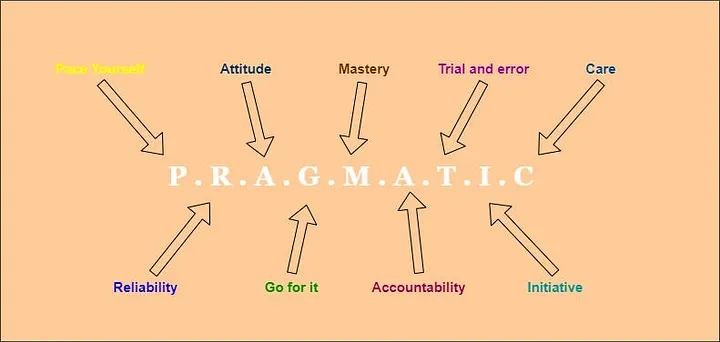
What Makes an Engineer Pragmatic?
A pragmatic engineer is rooted in practicality. They focus on real-world constraints — time, resources, team capabilities, and organizational goals. Their approach is grounded in delivering working solutions, even if those solutions aren’t the most elegant or complex. Pragmatic engineers prioritize what works in practice, understanding that perfection can often be the enemy of progress.
Key Traits of a Pragmatic Engineer:
Focus on Outcomes: Pragmatic engineers understand that the goal is to solve the problem, not to create the most complex or ideal solution. They prioritize solutions that work, ensuring they address the problem efficiently and effectively.
Adaptability: In the fast-paced world of engineering, things change quickly. Pragmatic engineers are flexible and can adjust their approach based on real-time feedback and constraints. Whether it’s time, budget, or technical limitations, they know how to pivot and deliver solutions that align with the current context.
Simplicity Over Complexity: A key principle of pragmatism is simplicity. Pragmatic engineers are often the first to recognize that simple solutions tend to be the most effective. They avoid over-engineering and create systems that are easy to maintain, troubleshoot, and scale.
Efficiency in Decision-Making: Instead of trying to find the perfect, most complex solution, pragmatic engineers look for solutions that can be executed quickly and efficiently. They are mindful of the time and resources at their disposal and always aim to do more with less.
Calculated Risk-Taking: Pragmatic engineers don’t shy away from risks, but they take calculated risks. Instead of waiting for a perfect solution, they are willing to make incremental improvements, learning from small mistakes rather than attempting to avoid risk entirely.
Effective Communication and Collaboration: Pragmatic engineers are able to bridge the gap between technical and non-technical stakeholders. They understand the business impact of their decisions and communicate clearly to ensure that their solutions align with organizational goals.
What Happens When Engineers Are Not Pragmatic?
On the flip side, non-pragmatic engineers often focus too much on idealism or theoretical perfection. While striving for excellence is admirable, sometimes this pursuit leads to overcomplication and unnecessary delays. Non-pragmatic engineers may pursue solutions that look great in theory but are impractical when applied to real-world situations.
Key Traits of a Non-Pragmatic Engineer:
Perfectionism: Non-pragmatic engineers can get caught up in the pursuit of the perfect solution, spending too much time designing complex systems that are difficult to implement or maintain. This over-engineering often leads to delays and missed opportunities for faster, simpler solutions.
Idealism Over Realism: Non-pragmatic engineers may aim for perfectly clean code or cutting-edge technologies, even when such solutions aren’t necessary for the current project. They can lose sight of the immediate goals in favor of theoretical ideals that are time-consuming or unrealistic.
Unnecessary Complexity: Instead of simplifying problems, non-pragmatic engineers might introduce unnecessary complexity. This can result in systems that are harder to understand, maintain, and troubleshoot, leading to higher costs and longer timelines.
Inflexibility in Approach: A non-pragmatic engineer may struggle to adapt to changing circumstances, resisting quick decisions or adaptations based on evolving requirements. They may be more focused on executing their plan as originally conceived, even if it’s no longer the most effective approach.
Ignoring Constraints: Non-pragmatic engineers often overlook real-world constraints like time, resources, or team expertise. They might advocate for using the latest technology or implementing features that sound great but are impractical given the project’s scope or the team’s current skillset.
Reluctance to Take Risks: Non-pragmatic engineers may shy away from risk-taking entirely, waiting for a “perfect” solution that might never come. They may hesitate to make small, manageable changes that could lead to greater improvements, fearing that even minor risks could lead to failure.
Why Pragmatism is Essential in Engineering
While idealism and perfectionism have their place in some contexts, being pragmatic in engineering allows for faster progress, better results, and sustainable solutions. Pragmatic engineers know that delivering working software or systems — even if not perfect — has far more value than striving for a theoretical ideal that could take months to implement.
In fast-moving fields like DevOps, cloud engineering, and software development, agility and adaptability are crucial. Pragmatic engineers are more likely to embrace continuous improvement, making incremental changes that allow for faster feedback loops and ensuring they stay aligned with business needs and technological advancements.
Common Pitfalls and Solutions
From what we observe, some common pitfalls arise when engineers focus too much on perfection or overcomplicate solutions. These include:
- Overengineering — Instead of solving the problem with the simplest possible solution, they might be trying to design an overly complex system that isn’t necessary.
- Focusing too much on tools instead of the actual goal — The team might be caught up in “tool obsession,” prioritizing selecting the best tool or architecture rather than solving the core problem.
- Analysis Paralysis — Too many options might be on the table, and the team is struggling to make a decision.
- Lack of an MVP or incremental improvement — Instead of delivering a simple, working solution first, they may be waiting to build a “perfect” system from the start.
- Misalignment with real business needs — They might not be engaging enough with stakeholders and end-users, focusing too much on technical aspects in isolation.
Suggested Solutions:
Follow the “KISS” principle (Keep It Simple, Stupid) — Always aim for the simplest effective solution.
Focus on the actual problem, not just the tools — Identify the core issue first, then pick the appropriate technology, not the other way around.
Build an MVP and iterate — Deliver a basic working solution first, then refine and scale it.
Take action instead of endless discussions — Sometimes, making a decision and moving forward is better than spending weeks debating.
Get fast feedback and optimize — Maintain constant interaction with users and stakeholders to ensure you’re solving the right problem.
Prioritize maintainability — Solutions should not only work today but be maintainable and scalable in the future.
Balance trade-offs wisely — Understand when to compromise on speed, performance, or cost without sacrificing long-term sustainability.
Conclusion
The difference between a pragmatic engineer and a non-pragmatic engineer boils down to practicality versus perfection. A pragmatic engineer understands the value of simplicity, adaptability, and efficiency. They focus on delivering results in the real world while still striving for improvement. In contrast, a non-pragmatic engineer might be more focused on creating ideal solutions, potentially at the cost of time, resources, and practicality.
Ultimately, pragmatism is not about sacrificing quality; it’s about balancing technical excellence with real-world feasibility. Engineers who embrace this mindset are more likely to succeed in dynamic, fast-paced environments, driving meaningful results while adapting to the ever-evolving world of technology.